8 Signs of Potassium Deficiency
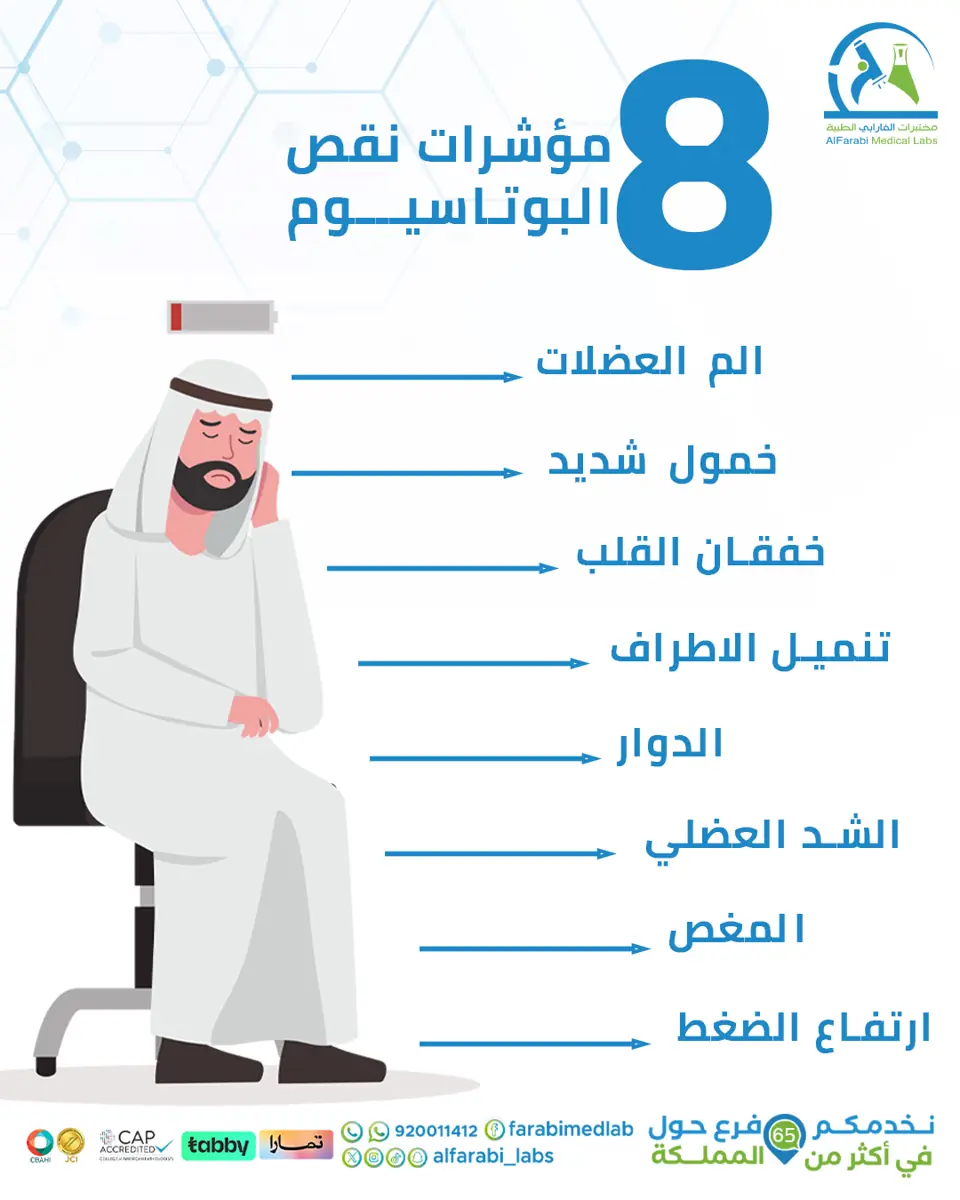
8 Signs of Potassium Deficiency: Notice Them and Start Testing 🧬
What is potassium and why test it?
Potassium is an essential mineral regulating heart rhythm, muscle contraction, nerve signals and fluid balance. Low blood levels may cause various symptoms requiring precise medical intervention.
Our laboratories provide accurate, fast potassium measurement within blood electrolyte testing for early detection and prevention of serious complications.
Deficiency is often initially unclear. Testing is recommended with these symptoms, diuretic use or chronic illnesses affecting salt balance.
🔍 Common deficiency symptoms identifiable through laboratory testing:
- Muscle pain or weakness: from low muscle-cell energy.
- Sluggishness and general fatigue: early electrolyte imbalance signs.
- Palpitations or irregular heartbeat: require immediate potassium testing.
- Numbness or tingling in hands and feet: indicates nerve effects.
- Dizziness: due to low blood pressure or poor circulation.
- Repeated muscle cramps: direct signs of low blood potassium.
- Abdominal pain or cramps: sometimes associated with low potassium.
- High blood pressure: because potassium regulates pressure through the kidneys.
📌 For regular health monitoring
- Blood Electrolytes Panel
- Kidney function tests related to potassium balance
- Monitoring blood pressure and heart patients and diuretic users
A test result is not a diagnosis. Show it to your doctor.