27/09/2025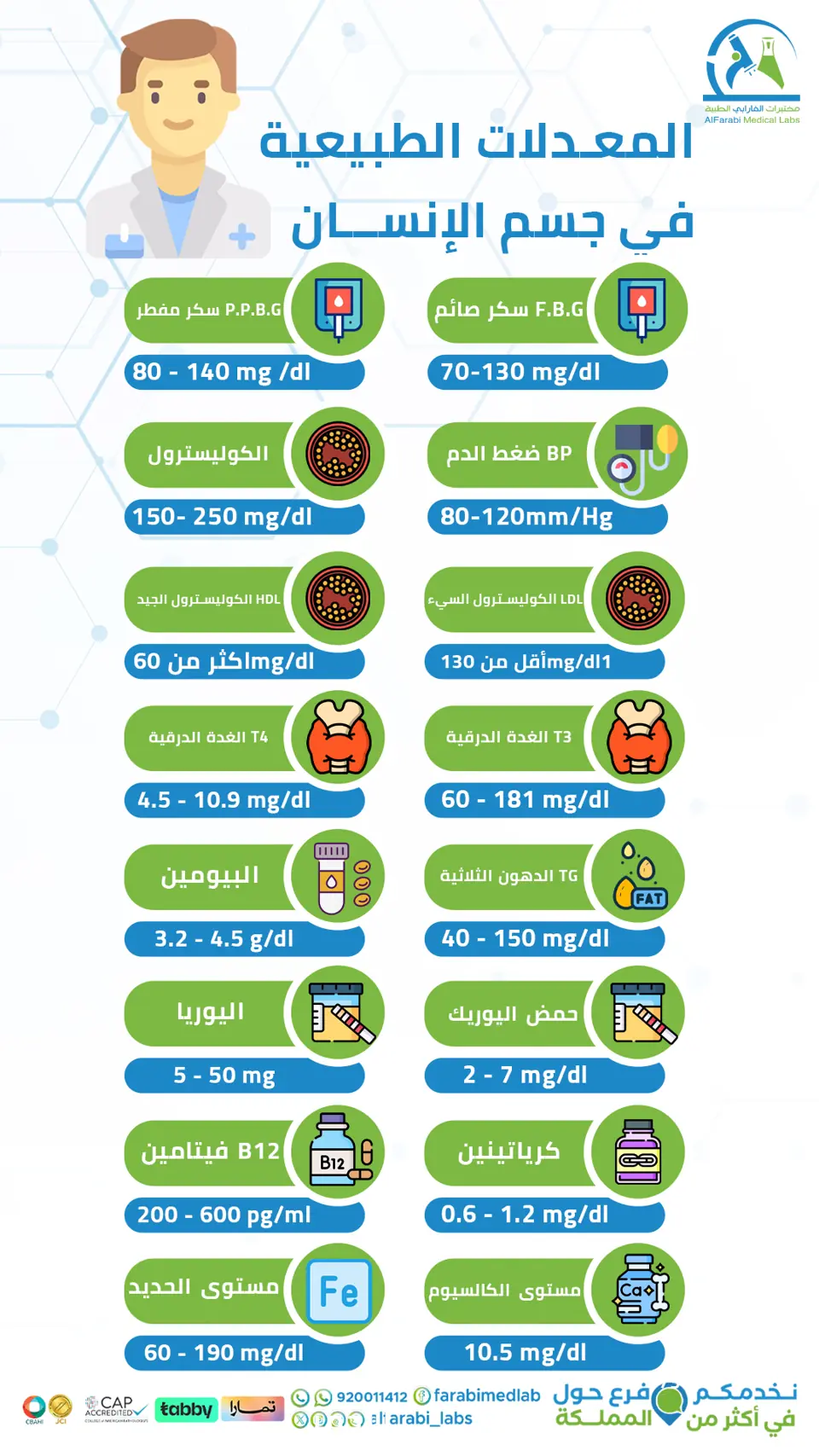
Normal Ranges in the Human Body
✨ Regular testing is more than numbers. It indicates your overall health. Any value outside the normal range may be an early sign of a health problem requiring attention.
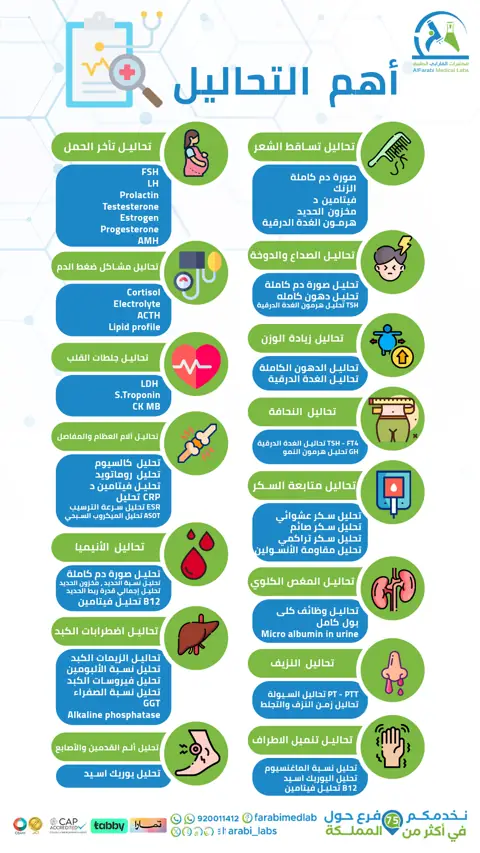
📊 Key tests and what they mean
🔹 Blood glucose
- Fasting (F.B.G): 70 - 130 mg/dl 📌 Persistently high levels may indicate diabetes, while very low levels may cause a severe drop and general weakness.
- After meals (P.P.B.G): 80 - 140 mg/dl 📌 Helps monitor the body's response to meals and diagnose hidden diabetes.
🔹 Blood pressure (BP): 80 - 120 mm/Hg 📌 High pressure strains the heart and arteries, while low pressure causes dizziness and poor concentration.
🔹 Blood lipids
- Total cholesterol (150 - 250 mg/dl): elevation increases heart disease risk.
- Bad cholesterol LDL (less than 130 mg/dl): elevation causes blocked arteries.
- Good cholesterol HDL (more than 60 mg/dl): protects the heart and arteries.
- Triglycerides TG (40 - 150 mg/dl): elevation is associated with weight gain and liver disease.
🔹 Thyroid gland
- T3: 60 - 181 mg/dl
- T4: 4.5 - 10.9 mg/dl 📌 Abnormal values may cause unexplained weight gain or loss, hair loss or disrupted energy.
🔹 Kidney function
- Urea (5 - 50 mg): elevation indicates kidney problems or dehydration.
- Creatinine (0.6 - 1.2 mg/dl): the most important test for assessing kidney efficiency.
- Uric acid (2 - 7 mg/dl): elevation causes gout and joint pain.
🔹 Minerals and vitamins
- Vitamin B12 (200 - 600 pg/ml): deficiency causes fatigue, numb extremities and memory problems.
- Calcium (up to 10.5 mg/dl): essential for bone and dental health; deficiency causes cramps.
- Iron (60 - 190 mg/dl): deficiency causes anemia and paleness.
- Albumin (3.2 - 4.5 g/dl): an important protein maintaining fluid balance.
💡 Medical advice from AlFarabi Medical Labs: Monitoring your normal ranges is a first line of defense against chronic diseases. Have regular tests at AlFarabi Medical Labs and feel reassured about your health.
A test result is not a diagnosis. Show it to your doctor.