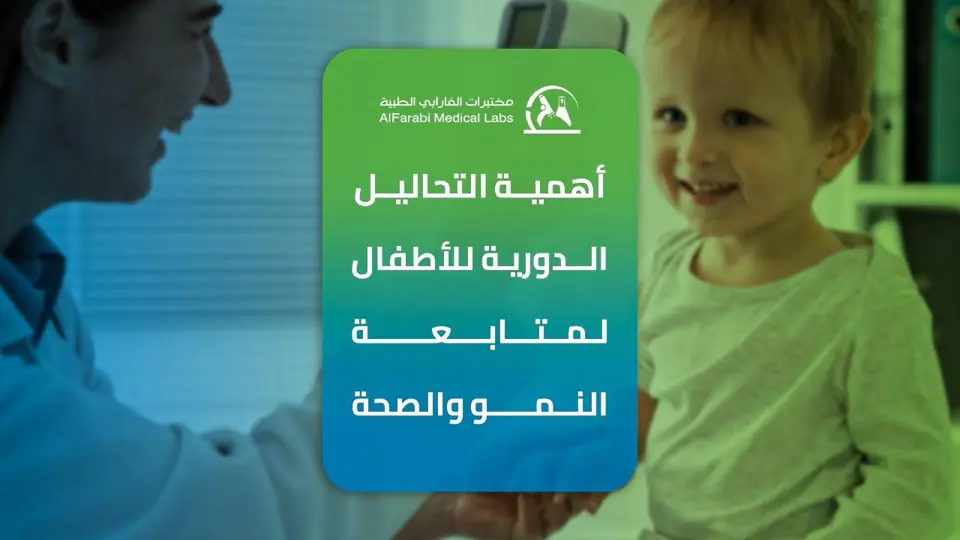
The Importance of Regular Tests for Monitoring Children’s Growth and Health
Article Outline
Introduction
What Are Regular Tests for Children?
Why Are Regular Tests Essential During Childhood?
Types of Regular Tests for Children
Signs That Require Immediate Testing
Regular Tests as a Means of Prevention
Why Choose AlFarabi Medical Labs for Children’s Tests?
Conclusion
Frequently Asked Questions (FAQs)
Introduction
Children have the greatest need for regular health monitoring, both when illness appears and as a preventive measure to maintain their health and ensure healthy growth. Regular tests help identify health problems early, before they develop into complex or chronic illnesses.
Most parents focus on proper nutrition and sufficient sleep for their children, but they may overlook the importance of regular medical tests that reveal nutritional deficiencies or growth problems. This is where AlFarabi Medical Labs comes in, offering comprehensive testing services for children using the latest medical equipment in a safe, age-appropriate environment.
What Are Regular Tests for Children?
Definition and Objectives
Regular tests for children are a group of laboratory investigations performed routinely, annually or every few months, as recommended by the doctor. Their purpose is to:
Monitor the child’s physical and mental development.
Detect hereditary or chronic diseases early.
Identify any vitamin or mineral deficiency.
The Difference Between Routine Tests and Tests During Illness
Routine tests: performed preventively even when the child has no symptoms.
Tests during illness: performed only after symptoms appear or a health problem is suspected.
Regular tests give parents peace of mind because they reveal hidden problems that may not appear during ordinary clinical examinations.
Why Are Regular Tests Essential During Childhood?
Detecting Anemia and Malnutrition
Children are more susceptible to anemia caused by iron deficiency or malnutrition. Tests help diagnose it early to avoid effects on physical activity and school performance.
Monitoring Bone Growth, Height, and Weight
Tests such as vitamin D and calcium help ensure normal bone and tooth development and identify any growth delay early.
Preventing Chronic Diseases Early
Some diseases, such as diabetes or thyroid problems, may begin with very mild symptoms. Early detection through testing prevents these conditions from developing into chronic health problems.
Types of Regular Tests for Children
Basic Blood Tests (CBC, Blood Sugar)
A complete blood count (CBC) helps detect anemia, infections, and low platelets. Blood sugar testing also determines whether a child is at risk of diabetes.
Immune System and Allergy Tests
Children often experience food allergies or weakened immunity. These tests identify allergens and help parents avoid them, while also showing the strength of the immune system.
Vitamin and Mineral Tests
Tests such as vitamin D, calcium, iron, and zinc identify any nutritional deficiency that may affect a child’s physical and mental development.
Gland and Hormone Tests
These include thyroid tests and other hormones that affect growth and energy. Any imbalance in these hormones may affect height, weight, and even mental abilities.
Signs That Require Immediate Testing
Persistent Fatigue and Reduced Activity
If a child experiences ongoing exhaustion or a loss of energy, the cause may be a deficiency in iron or essential vitamins.
Loss of Appetite or Weight Loss
Low weight or poor appetite may indicate digestive problems or malnutrition.
Repeated Infections and Colds
Repeated infections may indicate a weakened immune system, which can be easily identified through testing.
Delayed Growth or School Performance
Delays in a child’s height or weight gain, poor concentration, and poor school performance are all signs that call for tests to identify the cause.
Regular Tests as a Means of Prevention
Preventing Future Health Complications
Early detection means faster, simpler treatment, reducing the risk of complications that may arise in the future.
Reducing the Need for Intensive Drug Treatment
Identifying a problem early spares the child lengthy treatment or strong medications.
Why Choose AlFarabi Medical Labs for Children’s Tests?
Accredited Laboratories and Accurate Results
AlFarabi Medical Labs is accredited by international medical organizations and uses the latest technologies to obtain reliable results.
Medical Staff Trained to Work With Children
The nursing and technical team is qualified to treat children gently, reducing their anxiety during testing.
Special Children’s Packages Covering the Most Important Tests
Packages designed specifically for children are available, including essential tests to monitor their growth and health.
Testing at Home
For parents’ and children’s convenience, AlFarabi Medical Labs provides home sample collection with the same accuracy and confidentiality.
Conclusion
Regular tests for children are a necessity for ensuring healthy growth and protecting them from disease. They reassure parents and spare children considerable potential suffering in the future.
With AlFarabi Medical Labs, you can feel reassured about your children’s health through comprehensive packages, accurate results, and convenient service at branches or at home. Make your child’s health a priority and begin their journey toward safe, healthy growth with AlFarabi Medical Labs.
Frequently Asked Questions (FAQs)
1. At what age should regular testing for children begin?
Doctors recommend starting tests from the first year of age and repeating them regularly.
2. Do tests differ between boys and girls?
The basic tests are the same, but some hormone tests may differ according to the child’s age and sex.
3. Does a healthy child also need these tests?
Yes, because tests reveal hidden problems that may not cause symptoms.
4. How long do results take at AlFarabi Medical Labs?
Usually only 24 - 48 hours, with clear, easy-to-understand reports.
5. Are the tests included in special packages?
Certainly. AlFarabi Medical Labs provides packages designed specifically for children at family-friendly prices.
A test result is not a diagnosis. Show it to your doctor.