10 Causes of Weight Gain Unrelated to Food
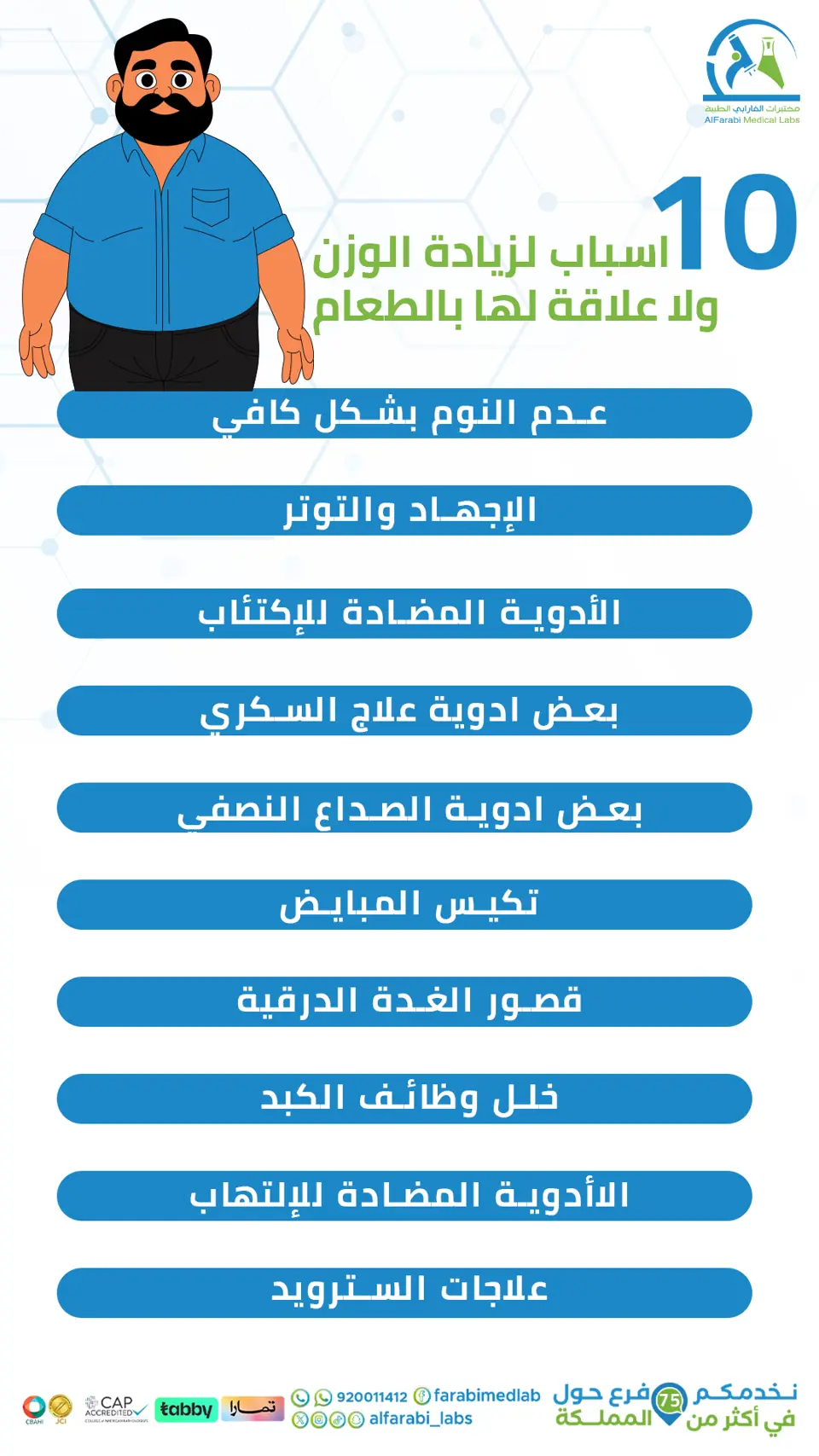
10 Causes of Weight Gain Unrelated to Food
From AlFarabi Medical Labs | AlFarabi Medical Labs
Not everyone with obesity overeats. Hormonal, psychological, and medication-related causes may affect weight independently of diet. Here are the main factors:
1. Insufficient Sleep
Lack of sleep affects appetite-regulating hormones such as leptin and ghrelin, increasing hunger and causing metabolic imbalances.
2. Stress and Tension
Chronic stress raises cortisol, stimulating fat storage, particularly around the abdomen.
3. Antidepressants
Some antidepressants, such as SSRIs and TCAs, increase appetite or slow metabolism.
4. Certain Diabetes Medications
Some medications, such as insulin or sulfonylureas, may cause weight gain as a side effect.
5. Certain Migraine Medications
Some headache medicines, such as Amitriptyline, may cause weight gain by affecting appetite centers in the brain.
6. Polycystic Ovary Syndrome (PCOS)
Causes hormonal imbalance involving insulin and testosterone, making weight loss harder for women.
7. Hypothyroidism
The thyroid regulates metabolism. Underactivity slows calorie burning and causes weight gain.
8. Liver Dysfunction
Liver diseases such as fatty liver may impede metabolism and lead to body fat accumulation.
9. Anti-Inflammatory Medications
Nonsteroidal anti-inflammatory drugs (NSAIDs) and some allergy medications may contribute to fluid retention and weight gain.
10. Steroid Treatments
Cortisone-type treatments such as Prednisone cause fluid retention and increased appetite and are associated with abdominal obesity.
🧪 Which Tests Are Recommended?
- Thyroid function tests (TSH, T3, T4).
- Ovarian hormone tests (LH, FSH).
- Cortisol tests.
- Liver enzyme tests (ALT, AST).
- Glycated hemoglobin (HbA1c).
📌 Medical advice: if you notice unexplained weight gain despite a consistent diet, the cause may involve hormones or internal body functions. Consult a doctor and have the necessary tests.
A test result is not a diagnosis. Show it to your doctor.