Blood Sugar Indicators: When Should You Worry?
🔹 Introduction
Repeatedly high or low blood sugar may be a warning sign that should not be ignored. Understanding blood sugar indicators and test numbers helps you take action in time before complications occur.
✅ First: Normal Blood Sugar Levels
| Test type | Normal value |
| Fasting Blood Glucose | 70 - 99 mg/dl |
| Blood sugar two hours after eating (PPBG) | Less than 140 mg/dl |
| Glycated hemoglobin HbA1c | Less than 5.7% |
| Random blood sugar (RBS) | Less than 200 mg/dl |
When Do Results Become a Warning Sign?
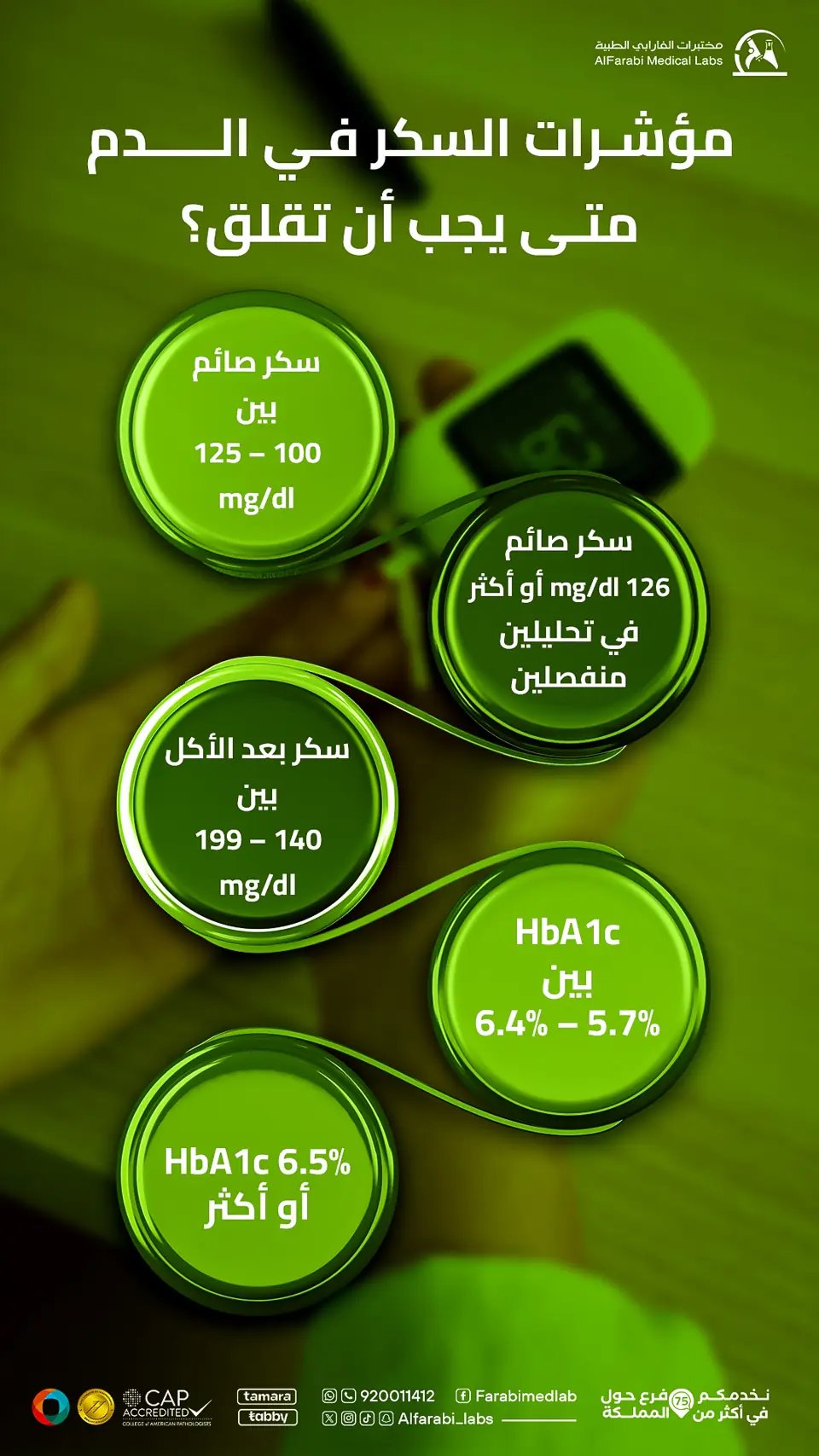
🔸 Fasting blood sugar between 100 - 125 mg/dl ⬅️ Prediabetes: dietary changes and regular testing are needed.
🔸 Fasting blood sugar of 126 mg/dl or more on two separate tests ⬅️ Diabetes is likely.
🔸 Blood sugar after eating between 140 - 199 mg/dl ⬅️ An abnormal increase indicating impaired glucose tolerance.
🔸 HbA1c between 5.7% - 6.4% ⬅️ Prediabetes.
🔸 HbA1c of 6.5% or more ⬅️ A clear diagnostic indicator of diabetes.
🔍 Signs That Should Prompt an Immediate Blood Sugar Test
✔ Extreme thirst and frequent urination
✔ Dry mouth and unexplained weight loss
✔ Persistent fatigue and blurred vision
✔ Slow wound healing or recurrent infections
✔ Numbness in the extremities or nighttime cramps
💡 Medical Advice
Blood sugar testing is not limited to people with diabetes. It should be performed annually for anyone over 35, anyone with a family history of the disease, or anyone with obesity or high blood pressure.
Choosing a trusted laboratory gives you accurate numbers to help you make the right health decision.
A test result is not a diagnosis. Show it to your doctor.